A good smoked fish brine is the single most important step between a dry, salty fillet and tender, glossy smoked fish that melts in your mouth. Whether you are smoking trout, mackerel, whitefish, or bluefish, this easy wet brine locks in moisture, seasons the flesh all the way through, and helps that signature smoky flavor stick.
Below you will find the exact salt-to-sugar ratio, brining times for every type of fish, and the pro steps that separate flabby, over-salted fish from perfectly cured fillets. Working specifically with salmon? See our dedicated smoked salmon brine for salmon-only ratios and timing.
Table of Contents
Why This Smoked Fish Brine Works
Brining is simple food science. When you soak fish in a salt-and-sugar solution, salt draws out a little surface moisture, then reverses course and carries seasoning deep into the flesh through osmosis. The proteins relax and hold onto water, so the fillet stays juicy even after hours in the smoker.
- Moisture retention – brined fish loses far less water during smoking, so it never turns dry or chalky.
- Even seasoning – the salt reaches the center of the fillet, not just the surface.
- Better texture – the brine firms up the flesh and helps it slice cleanly.
- A proper pellicle – brined, dried fish forms the tacky skin that smoke clings to.
Skip the smoked fish brine and you get fish that is bland in the middle, harsh on the outside, and prone to drying out. A few hours in this simple smoked fish brine fix all of that.
Best Fish for Smoking: Trout, Mackerel and More
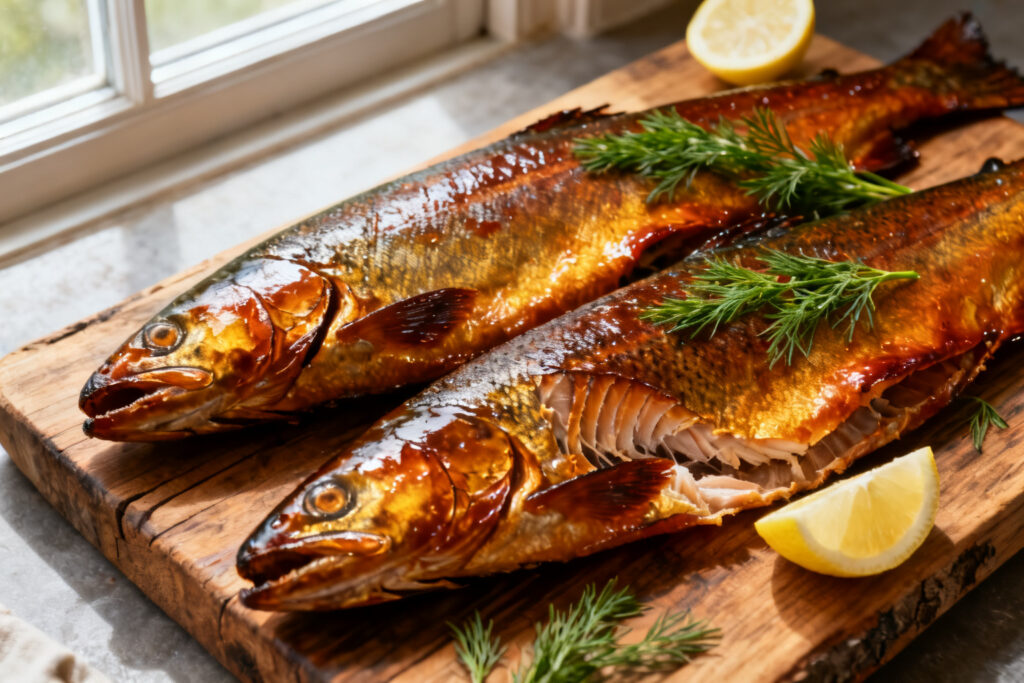
Oily, fatty fish take smoke the best because the fat carries flavor and keeps the flesh moist. The good news is that this same smoked fish brine works across nearly every species — you only adjust the timing for thickness.
- Rainbow trout – thin, sweet fillets that brine in just 6–8 hours. A great beginner fish.
- Mackerel – rich and oily, perfect for cold or hot smoking. Try our cold smoked mackerel for a deeper dive.
- Whitefish – a classic choice with a clean, mild taste that soaks up smoke beautifully.
- Bluefish and tuna – strong-flavored fish that stand up to bold woods like hickory.
- Salmon – works too, but deserves its own ratios; use our salmon brine recipe instead.
Choose the freshest fish you can find: clear eyes, firm springy flesh, vibrant color, and a clean ocean smell. Good frozen fish, flash-frozen at sea, is a reliable budget option when fresh is not available.
Smoked Fish Brine Ingredients
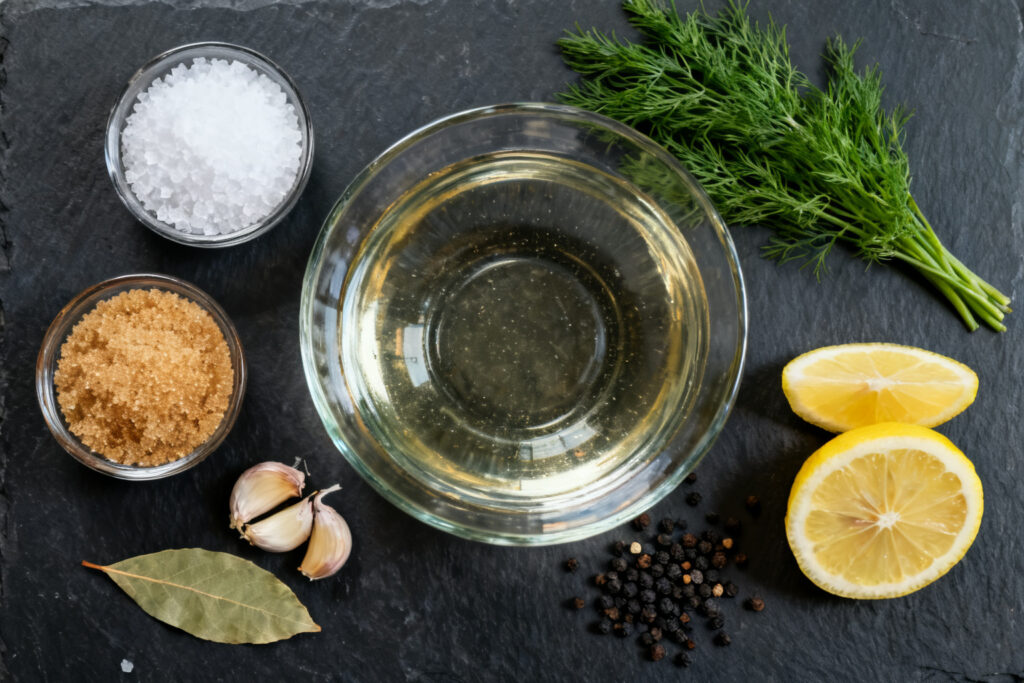
The base of a reliable smoked fish brine is just three things — water, salt, and sugar. Everything else is flavor. Here is what goes into this recipe:
- 4 cups cold water – the base of the solution.
- 1/2 cup kosher salt – use coarse kosher salt; cut to 1/4 cup if using fine table salt.
- 1/2 cup brown sugar – balances the salt and adds a light caramel note.
- 2 tbsp fresh dill – the classic herb for smoked fish.
- 3 cloves garlic, crushed – for savory depth.
- 1 tsp black peppercorns + 1 bay leaf – gentle aromatics.
- Optional: 2 tbsp maple syrup for a sweeter glaze, or 1/2 cup lemon juice for brightness.
The salt-to-sugar ratio here is 1:1, which gives a balanced cure. If you like sweeter, candy-style fish, push the sugar up — our salmon candy recipe shows that sweeter end of the spectrum.
How to Make a Smoked Fish Brine (Step by Step)
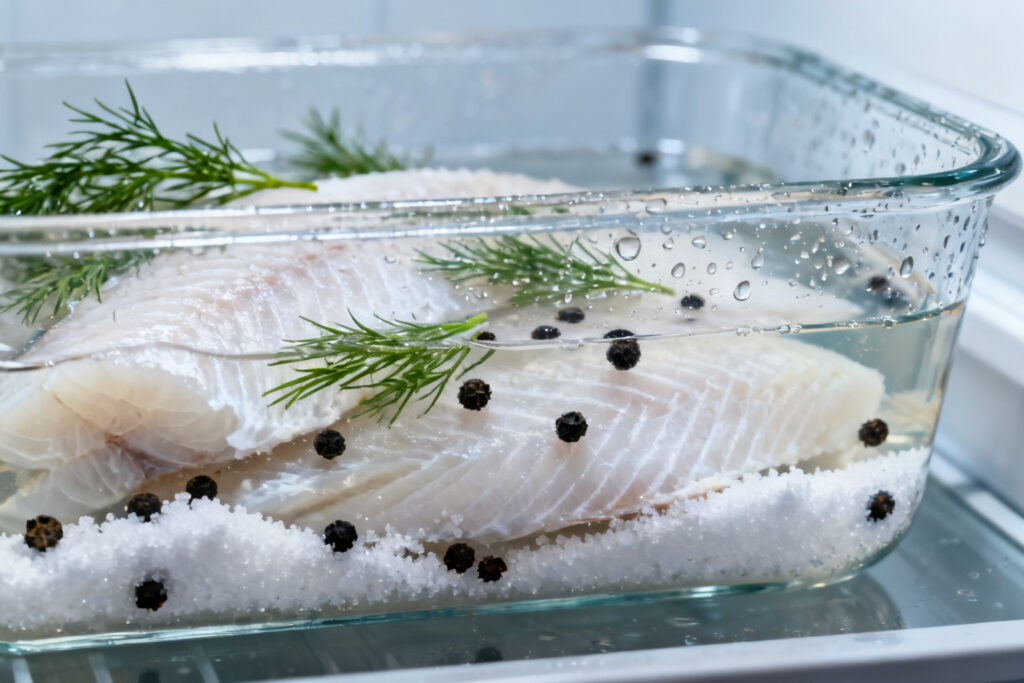
Making this smoked fish brine takes about ten minutes. The fish does the rest of the work in the fridge.
- Dissolve. In a large non-reactive bowl, whisk the cold water, salt, and brown sugar until no grains remain.
- Add aromatics. Stir in the dill, garlic, peppercorns, bay leaf, and any optional maple or lemon.
- Submerge. Rinse and pat the fillets, then lower them into the brine until fully covered. Weigh them down with a small plate if they float.
- Chill. Cover and refrigerate, keeping the fish at 40°F or below the entire time.
- Rinse and dry. Lift the fish out, rinse off the surface salt, and pat completely dry.
- Form the pellicle. Rest the fillets uncovered on a rack in the fridge for 1–4 hours until the surface turns tacky and slightly shiny.
That tacky pellicle is not optional — it is the glue that makes smoke stick. Load wet fish into a smoker and the smoke simply rolls off.
Wet Brine vs Dry Brine for Fish
There are two ways to cure fish before smoking, and both have a place.
Wet brine
A wet brine — the method in this recipe — submerges the fish in salted water. It is the most forgiving approach, seasons evenly, and is almost impossible to over-salt within normal times. It is ideal for lean or thin fillets that dry out easily.
Dry brine
A dry brine (or dry cure) packs a salt-and-sugar mix directly onto the fish with no water. It pulls out more moisture for a firmer, more concentrated result and a shorter cure. Many pitmasters prefer a dry cure for salmon; see how it compares in our cold smoked salmon guide.
For most smokers starting out with trout, mackerel, or whitefish, the wet smoked fish brine below is the easier, more reliable path.
How Long to Brine Fish Before Smoking
Brining time depends almost entirely on thickness. Too short and the seasoning never reaches the center; too long and the fish turns salty and mushy. Use this as your guide:
- Thin fillets (trout, mackerel, ~1/2 inch): 6–8 hours.
- Medium fillets (whitefish, ~1 inch): 8–10 hours.
- Thick cuts or whole sides (over 1 inch): 10–12 hours.
- Small pieces or chunks: 3–4 hours.
Overnight is the sweet spot for most home smokers using this smoked fish brine. If you are ever unsure, err on the shorter side — you can always add salt later, but you cannot take it out.
How to Smoke Fish After Brining
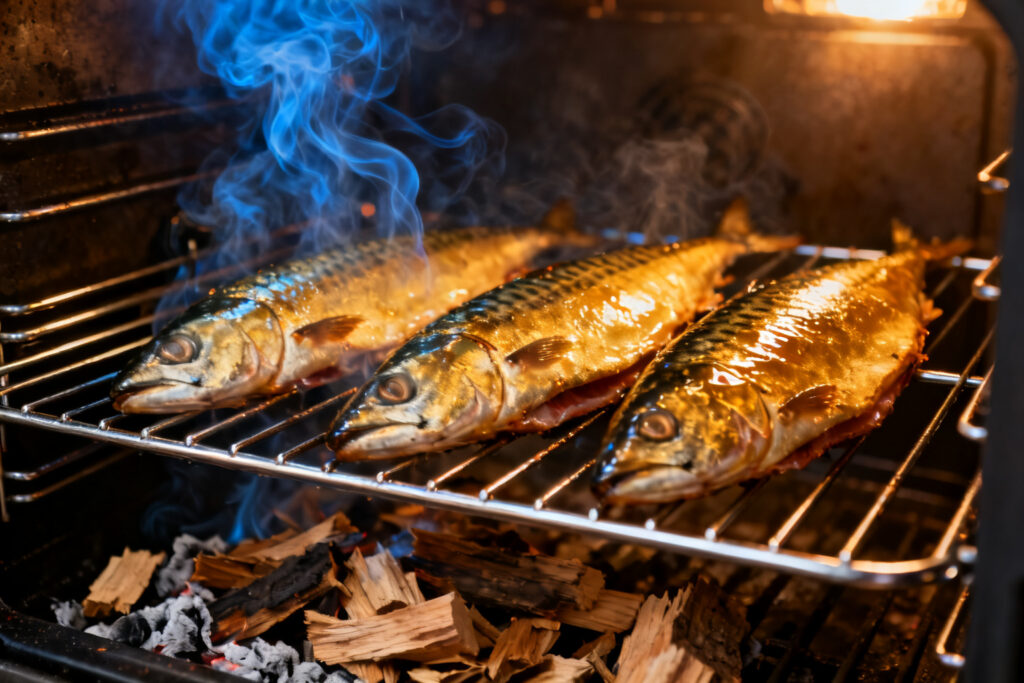
Once the fillets are brined and the pellicle has set, they are ready for the smoker. Three things decide the result: wood, temperature, and doneness.
Best wood for smoking fish
- Alder – the traditional choice for fish; mild, slightly sweet, never overpowering.
- Apple and cherry – soft, fruity smoke that flatters delicate white fish.
- Maple – light, nutty sweetness.
- Hickory – bold and strong; save it for oily fish like bluefish or mackerel.
Smoking temperature
For hot smoking, hold the smoker at 175–200°F and cook until the internal temperature reaches 145°F, which the USDA lists as the safe minimum for fish. Cold smoking runs much lower (80–90°F) over many hours and is a more advanced technique best done with cure salts.
Depending on thickness, hot smoking usually takes 2–4 hours. Pull the fish as soon as it hits 145°F to keep it moist.
Pro Tips for Perfect Smoked Fish
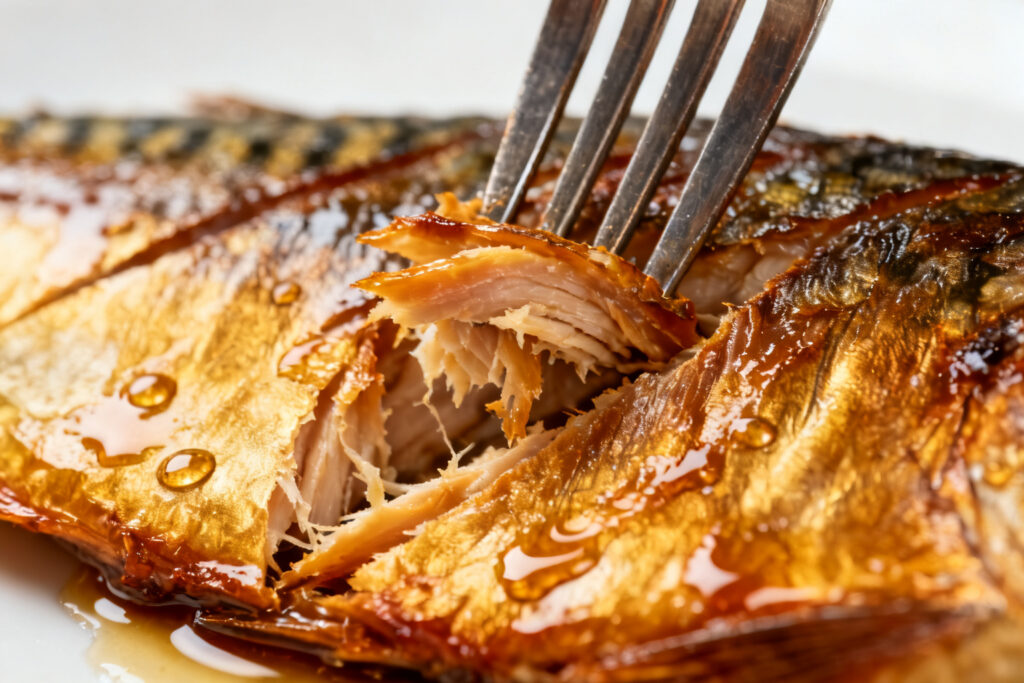
- Always use a non-reactive container – glass, ceramic, or food-grade plastic. Metal reacts with the salt and taints the flavor.
- Keep it cold. Brining happens in the fridge, never on the counter. Warm fish in a salty solution is a food-safety risk.
- Do not skip the pellicle. One to four hours of air-drying makes a visible difference in how much smoke the fish takes.
- Pair the right wood to the fish. Delicate fish wants mild wood; bold fish can handle more.
- Use a thermometer. 145°F internal is the target — guessing leads to dry or undercooked fish.
Flavor Variations to Try
Once you have the base smoked fish brine down, it becomes a template you can flavor a dozen ways. Keep the salt-to-sugar base the same and swap the aromatics:
- Citrus-herb: add lemon and orange zest with extra dill and a few thyme sprigs for a bright, fresh finish.
- Maple-glazed: stir in 1/4 cup maple syrup and brush more on during the last 30 minutes of smoking for a sweet, lacquered crust.
- Spicy: add a tablespoon of crushed red pepper or a sliced chili for a gentle heat that builds under the smoke.
- Teriyaki-style: replace half the water with soy sauce and add grated ginger and garlic for a savory, Asian-inspired cure.
Each variation uses the exact same method and timing — only the seasonings change. Start with the classic version once, then branch out from there.
Troubleshooting Common Problems
Most problems with cured fish trace back to one of three things: time, temperature, or drying. Here is how to fix the common ones.
- Too salty: you brined too long or used fine salt by volume. Rinse longer next time and cut the cure time by a few hours.
- Smoke will not stick: the pellicle never formed. Air-dry the rinsed fillets uncovered in the fridge for at least an hour before smoking.
- Mushy texture: the fish sat in the solution far too long. Stick to the timing chart above and keep everything cold.
- Bland center: the cut was too thick for the time used. Give thick fillets the full 10 to 12 hours.
Storage and Make-Ahead Tips
Smoked fish keeps well, which is part of why smoking has been a preservation method for centuries.
- Refrigerator: store in an airtight container for up to 10 days.
- Freezer: wrap tightly and freeze for up to 3 months. Thaw overnight in the fridge.
- Make-ahead: the smoked fish brine itself can be mixed a day in advance and kept cold until you are ready to add fish.
Smoked Fish Brine FAQ
Do you rinse fish after brining?
u003cpu003eYes. After brining, rinse the fillets under cold water to wash off surface salt, then pat them completely dry. Skipping the rinse leaves the fish too salty and prevents a good pellicle from forming.u003c/pu003e
How long should you brine fish before smoking?
u003cpu003eMost fish brine for 6 to 12 hours depending on thickness. Thin fillets like trout and mackerel need 6 to 8 hours, while thick cuts need 10 to 12. Overnight works well for almost any fillet.u003c/pu003e
What is the ratio of salt to sugar in a fish brine?
u003cpu003eA balanced smoked fish brine uses a 1:1 ratio of salt to sugar, such as 1/2 cup kosher salt to 1/2 cup brown sugar per 4 cups of water. Increase the sugar for a sweeter, candy-style finish.u003c/pu003e
Can I use this brine for salmon?
u003cpu003eYou can, but salmon benefits from its own ratios and timing. For the best results with salmon, use our dedicated smoked salmon brine recipe instead of this all-purpose fish brine.u003c/pu003e
Why is my smoked fish dry?
u003cpu003eDry smoked fish usually means it was not brined long enough, was smoked too hot, or was cooked past 145u0026deg;F. Brine properly, hold the smoker at 175 to 200u0026deg;F, and pull the fish the moment it reaches 145u0026deg;F internal.u003c/pu003e
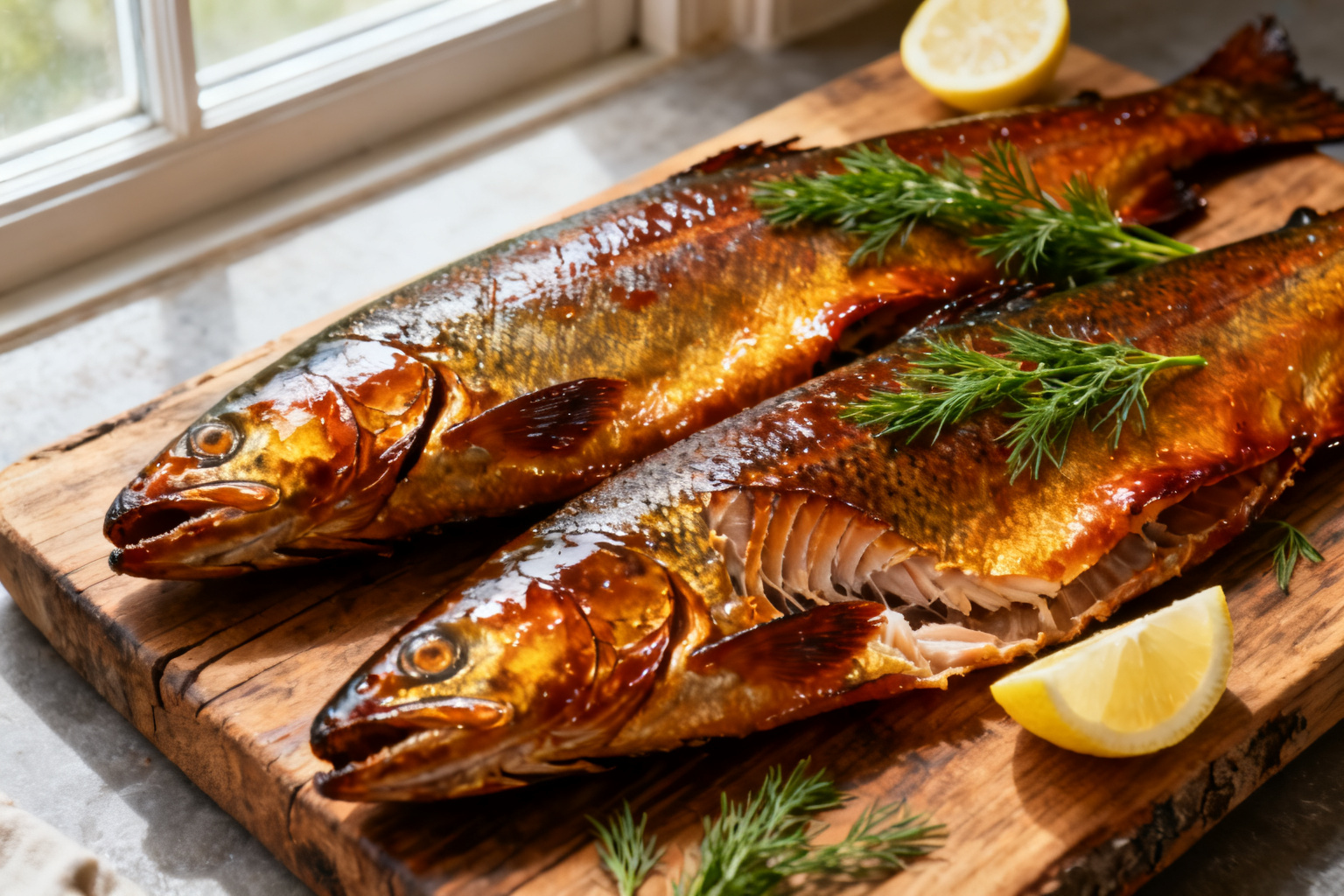
The Best Smoked Fish Brine
Ingredients
Method
- In a large non-reactive bowl, whisk the cold water, kosher salt, and brown sugar until fully dissolved.
- Stir in the dill, crushed garlic, peppercorns, bay leaf, and optional maple syrup and lemon juice.
- Rinse your fish fillets, pat dry, and fully submerge them in the brine. Cover and refrigerate.
- Brine 6-8 hours for thin fillets (trout, mackerel) or up to 12 hours for thick cuts. Keep the fish at 40°F or below the whole time.
- Remove the fish, rinse under cold water, and pat completely dry.
- Set the fillets skin-side down on a rack and refrigerate uncovered 1-4 hours until a tacky pellicle forms.
- Smoke at 175-200°F until the internal temperature reaches 145°F, about 2-4 hours depending on thickness.
1 thought on “Smoked Fish Brine: The Best Recipe for Trout, Mackerel & More”
Comments are closed.